


Product engineering · Switzerland
Prototyping.
DOMTEKNIKA develops prototypes to test ideas in use, verify mechanisms and prepare the next stages of product development.
Discuss your requirementsTechnical insight
Which prototype supports which decision?
A prototype can explore movement, support user trials or prepare for manufacturing. The question being answered determines the material, process and level of finish required. Choosing what you want to learn helps direct the investment.
| Prototype type | The question it explores | Still to verify |
|---|---|---|
| Proof of principle | Does the proposed motion or mechanism work? | Final space requirements, durability and manufacturing. |
| User trial | Do handling, access and user actions work as intended? | Material performance and production repeatability. |
| Production representative | Are assembly and behaviour consistent with the intended process? | Process variation and the tests needed for production release. |
Takeaway
Before building, define a question, a success criterion and the decision to make from the result. A 3D printed part can validate space requirements; its behaviour needs reassessment if the final material or process changes.
A challenge, a real project
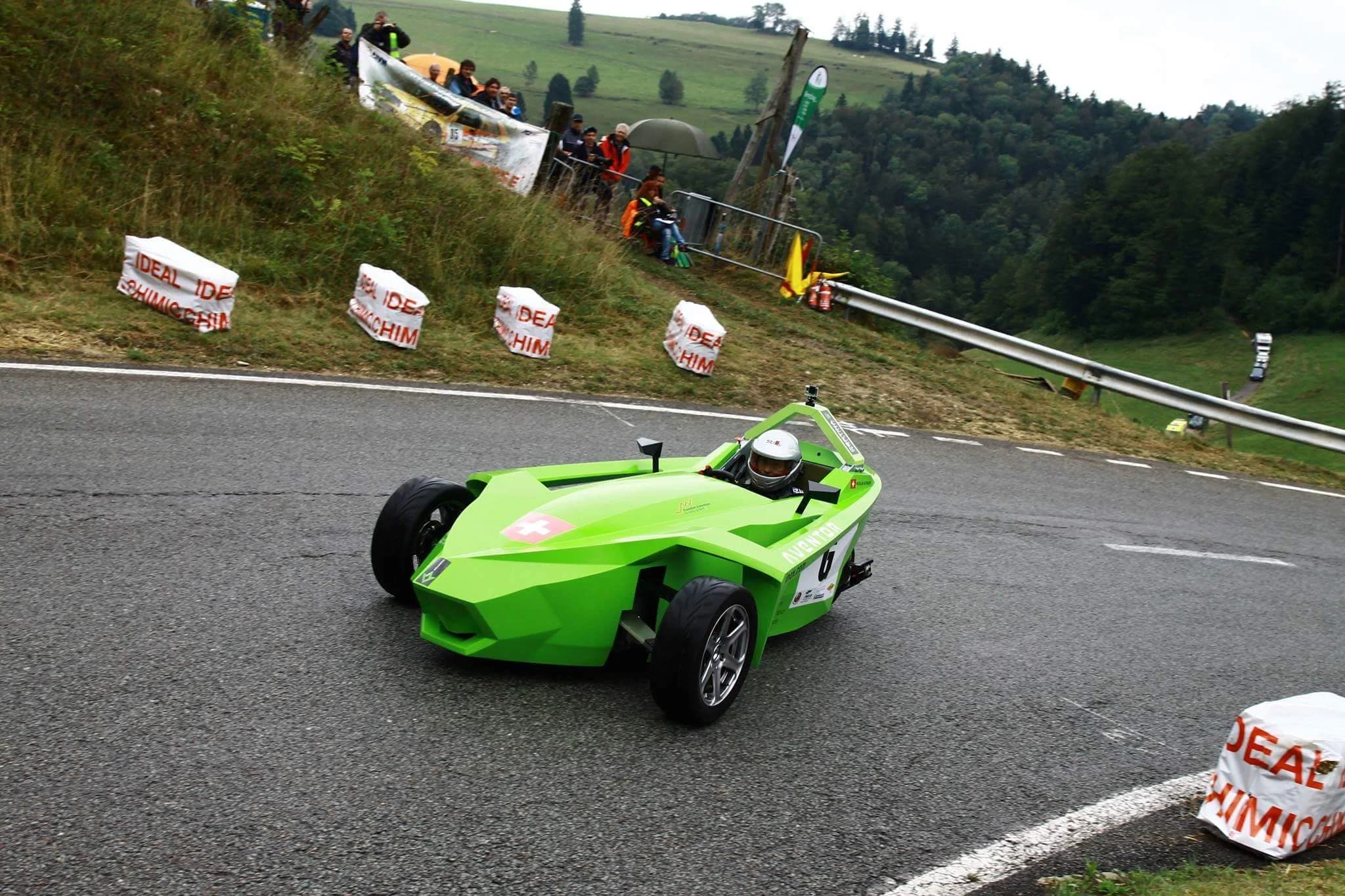
Aventor
Three- and four-wheel concepts brought to physical prototypes.
Aventor began in 2012 as an internal project. DOMTEKNIKA developed its electrical and mechanical architectures, studied three- and four-wheel configurations and built physical prototypes. The project shows the progression from a concept to a complete system, before a separate startup was established.
View project
When to involve us
Get practical answers before committing to the next development stage.
- Verify a function or movement
- Test ergonomics and component integration
- Improve an existing prototype
Our approach
A prototype should answer a specific question: verify a movement, test ergonomics or demonstrate a function. We define what must be validated before choosing its construction and level of finish.
Choose what to test
Define the question and observation criteria.
Build the useful prototype
Match materials and finish to the planned test.
Test and iterate
Document observations and necessary design changes.
What you receive
- Prototype or demonstrator suited to the need
- Validation points and test observations
- Design revisions for the next development stage
Testing informs design iterations. A functional demonstrator and a production-representative part serve different purposes; the scope is tailored to the decision you need to make.
We agree the scope, tests and deliverables with you before work begins.
Practical questions.
Must a prototype look like the final product?
Not always. A simple assembly may be enough to check a movement. Representative form and ergonomics matter when testing product use.
Is a working prototype ready for production?
Not necessarily. Materials, tolerances, assembly and the production process may need a separate industrialisation stage.
How do you choose between 3D printing and machining?
3D printing builds a part in layers; machining removes material from a blank. The choice depends on geometry, the required material, functional surfaces and the loads to be tested. For a prototype, any finishing operations and the level of precision actually needed should also be defined.
For our first conversation
.What should your next prototype demonstrate?
Your sketches, models and existing test results will help us define what to test and choose a prototype suited to the decision you need to make.
- Your objective and how the product will be used
- What you already have: an idea, drawings or a prototype
- Your technical constraints and target date
Your information is treated confidentially.